Thursday, 4 May 2017

SONIA TO DISCUSS CANDIDATE FOR PRESIDENTIAL POLL
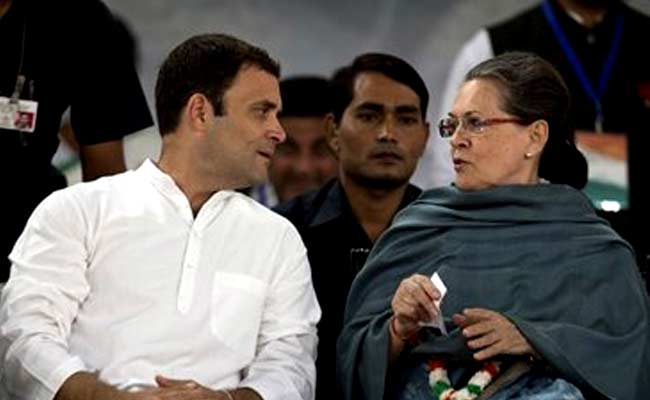

With two months left for ensuing presidential, the candidate nominee consensus among the opposition members are crucial thus Congress president takes a lead in reaching his bench members to get first hand ideas of names for the president candidate.Sonia Gandhi, son Rahul Gandhi meet opposition leaders to build consensus on common candidate for presidential polls.
Congress President Sonia Gandhi on Wednesday stepped up discussions for forging opposition unity on fielding a joint presidential candidate, holding talks with working president of the National Conference Omar Abdullah.
Gandhi, who has been at the forefront of efforts to evolve a consensus among opposition parties for putting up common candidates for the posts of president and vice president who are “acceptable to the country”, will be holding parleys with West Bengal Chief Minister Mamata Banerjee, Bahujan Samaj Party supremo Mayawati and Dravida Munnetra Kazagham leader M K Stalin soon, Congress sources said.
They added that the meetings with these leaders will be held over a week or 10 days.
The Congress chief has already held talks with several opposition leaders including Nitish Kumar and Sharad Yadav of the Janata Dal-United, Nationalist Congress Party president Sharad Pawar and Left leaders Sitaram Yechury and D Raja, besides Indian Union Muslim League general secretary P K Kunhalikkutty.
She has separately held telephonic conversation with Samajwadi Party’s Mulayam Singh Yadav and Rashtriya Janata Dal Lalu Prasad, even as party vice president Rahul Gandhi also held consultations with Sharad Pawar, Yechury and Uttar Pradesh’s former chief minister Akhilesh Yadav, the sources said.
A senior Congress leader said opposition parties are trying to build a consensus on the issue.
He also said that once the initial discussions are over, if needed, structured talks with important leaders could take place. He voiced hope that the names would be finalised before the end of this month.
“One man decides all dictum will not do and one ideology can’t be thrust upon this country. There has to be a national consensus on posts as important as the post of president and vice president,” said party in-charge of communications department Randeep Surjewala.
He said Sonia and Rahul Gandhi have both held talks with a series of leaders and “our doors and minds are open, for we feel that one person cannot decide everything”.
The Congress leader claimed the Modi government had decided to not hold consultations even inside the cabinet, much less with National Democratic Alliance allies.
Surjewala said, in these circumstances, should this country not rise in unison and agree to a person who would be best suited to defend our Constitution, lead our armed forces and protect the democratic ethos of the country.
“The battle of ideologies, battle of defending the Constitution, battle of protecting what is core foundation of our democracy is larger than any other goal that any political party should strive for. That is what the Congress party and all other political parties are striving for today,” he said.
The Congress had not fielded its candidate against APJ Abdul Kalam when Atal Bihari Vajpayee was the prime minister.
“Modi is no Vajpayee. In his thought process there is no scope for dissent or dialogue. Perhaps that is the reason why prime minister and party do not consult their own allies,” Surjewala said.
The sudden flurry of activity by the opposition to forge a strong alliance to take on the Narendra Modi-led NDA in the presidential election has come after a string of victories for BJP in state assembly polls and municipal elections.
Some feel the united face of the opposition for the presidential poll may well turn out to be a precursor to an anti-NDA front ahead of the 2019 Lok Sabha election.
The presidential election has to be held before July 24 when incumbent Pranab Mukherjee’s term ends.
He had taken office in July 2012, defeating the NDA’s candidate late P A Sangma.

© Copyright 2017 PTI. All rights reserved. Republication or redistribution of PTI content, including by framing or similar means, is expressly prohibited without the prior written consent.

INDIA TEST-FIRES AGNI-II BALLISTIC MISSILE

India’s nuclear-capable, surface-to-surface Agni-II ballistic missile, was today test-fired from the Wheeler Island, off Odisha coast today. It has a strike range of two thousand kilometres.
Defence sources said the test was aimed at re-establishing the operational effectiveness of the weapon system. The successful launch once again proved reliability of the medium range surface to surface missile. The missile can carry a nuclear payload of one thousand kilogram.
Agni missile series being developed by DRDO as a deterrent against nuclear armed neighbours are among India’s most sophisticated weapons.

EXCLUSIVE INDIA LAUNCH OF THE ‘LE MUSK’

PRESS INVITATION

PVR Cinemas cordially invites you for the Exclusive India launch of the Prelude of the film & to share with you the uniqueness of the same

‘LE MUSK’
(A.R Rahman’s Debut Directorial venture & one of the World’s First Cinematic Virtual Reality Immersive narratives)

 To be addressed by:
  • A.R. Rahman
  • Gautam Dutta (CEO, PVR Ltd.)

Time: 2:00pm
Date: 5th May 2017 (Friday)

NAIDU:INDIA AT THRESHHOLD OF DIGITAL BROADCASTING
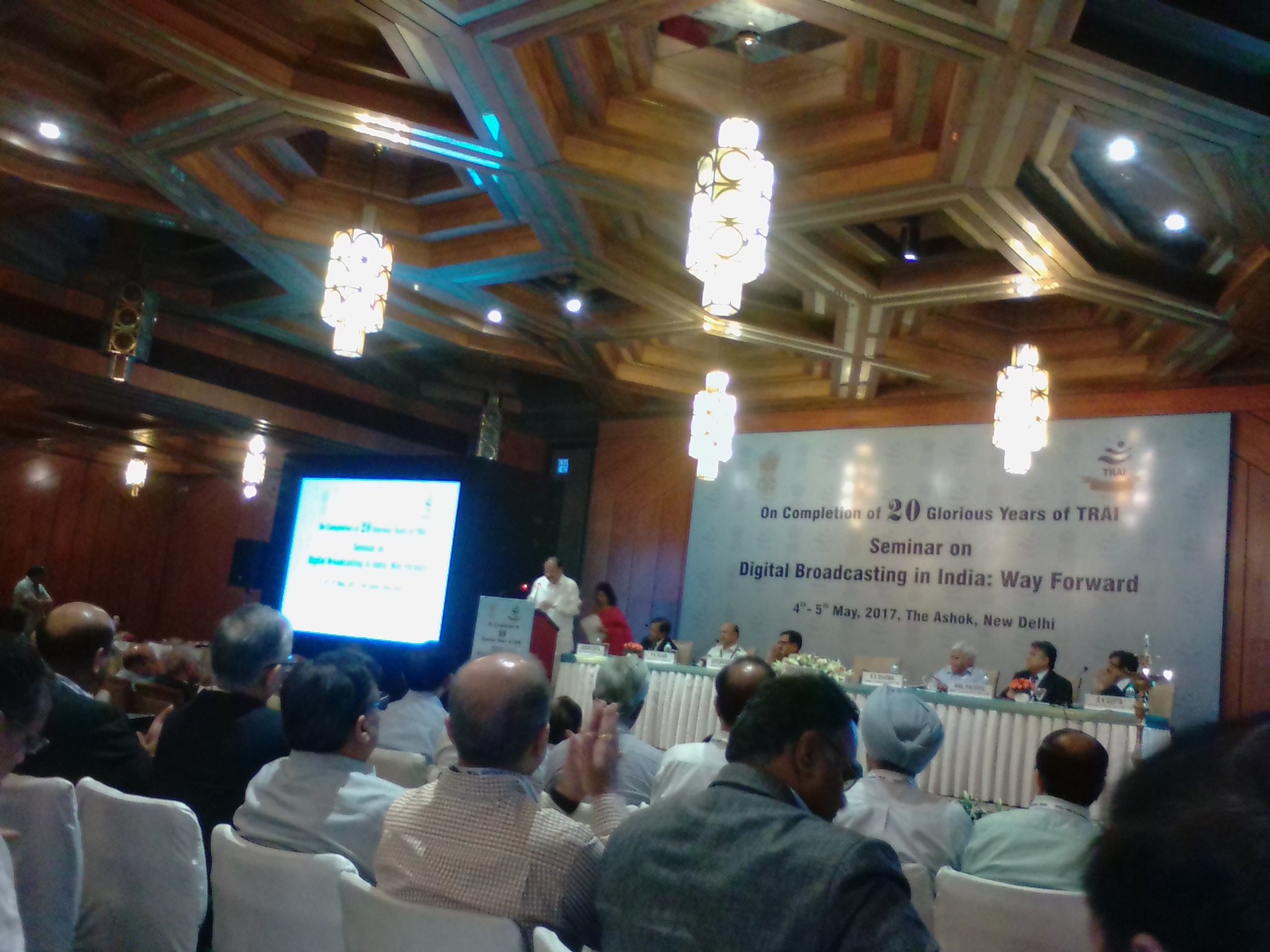
TRAI Seminar at Ashoka on 20 Glorious Years TRAI
Information and Broadcasting Minister M Venkaiah Naidu has said that Indian broadcasting is at threshold of entering into a new era of digital broadcasting largely driven by digitization and Internet usage. He was speaking at a seminar on Digital Broadcasting in India on the occasion of Telecom Regulatory Authority of India, TRAI’s anniversary in New Delhi today.
Mr Naidu said, consumers are now experiencing benefits of digital services as the government has completed digitization of Cable TV networks.
The Minister said, Good and Services Tax, GST will be a game changer for the sector. He said, broadcasting is a sunrising sector and time has come to ensure the availability of indigenous products in it.
Talking about Prime Minister’s Mann Ki Baat programme, Mr Naidu said, it has revived Radio broadcasting in the country. He expressed concern over sensationalism in media saying it has become order of the day. He said, it has put the credibility of communicators on stake.
Congratulating TRAI on completing 20 yrs, Mr Naidu said, it has contributed to growth of telecom and broadcasting while ensuring consumer protection and fair play. He said, regulation is needed for better implementation but it should not be strangulation for growth.
On the occasion, Mr Naidu also released the Bi-decadal report on TRAI’s achievements.

INDIAN ECONOMY UPTO APRIL 2017
photo
Want to make India the most open economy in the world: PM 
Asian Development Bank (ADB) has said that Indian economy will grow 7(point)4 per cent this fiscal, and 7(point)6 per cent in the next fiscal. India had grown 7.1 per cent in the previous fiscal.
ADB Chief Economist Yasuyuki Sawada said that reforms like the Goods and Services Tax and the new bankruptcy law will make it easier to do business in India. On the impact of rupee appreciation on exports, he said, the appreciation cannot be considered in isolation, and the overall export performance of India so far seems quite positive.
The rupee has appreciated by over 5 per cent against the US dollar since January. Mr Sawada was talking to the media at Yokohama in Japan yesterday, a day before finance ministers and central bank governors meet for the ADB’s 50th annual meeting.
Mr Sawada said, emerging orientation in US and Europe for protectionism in trade is worrisome, but not enough to break the global economy. He said ADB stresses on more open trade and more free movement of capital, and it should play an important role to push an open trade and investment regime.
Mr Sawada cited the example of China, which is shifting from an export driven model to a more internal demand driven model. He said there is a trend in Asia that domestic consumption and investment play a much more important role than external demand. But this trend does not deny the importance of trade, he said.
Minister of State for Food C R Chaudhary said in a written reply to parliament on Tuesday that the government had approved the creation of a buffer stock of up to 2 million tonnes, half of which will be imported.
The Union Cabinet approved a new framework for dealing non-performing assets (NPAs) in the banking system, details will be announced after President Pranab Mukherjee gives his assent to an ordinance to amend the Banking Regulation Act to resolve the Non Performing Assets crisis.
The set of measures includes the promulgation of an Ordinance to amend the Banking Regulation Act to give more powers to Reserve Bank of India and its committees to act on behalf of banks while deciding on NPAs.
The Cabinet also gave its nod to the National Steel Policy- 2017 which targets to achieve 300 Million Tonnes of steel making capacity by 2030 with an additional investment of ten lakh crore rupees.
The new steel policy seeks to enhance domestic steel consumption and ensure high quality steel production and create a technologically advanced and globally competitive steel industry. It is aimed at increasing consumption of steel in major segments like infrastructure, automobiles and housing. It is also intended to create self sufficiency in steel production by providing policy support and guidance to private manufactures, MSME and steel producers.
The Cabinet also approved policy for providing preference to domestically manufactured iron and steel products on Government procurement. The policy seeks to accomplish the Prime Minister’s vision of ‘Make in India’ with objective of nation building and encourage domestic manufacturing. It will be applicable on all government tenders where price bid is yet to be opened.
The Cabinet gave its approval for the declaration of Vijayawada Airport as International Airport, as per the provisions of Andhra Pradesh Reorganisation Act, 2014. It also gave ex-post facto approval to the Memorandum of Understanding on Third Line of Credit of 4.5 billion dollars to Bangladesh for implementation of developmental projects.
The Cabinet Committee on Economic Affairs approved the initiation of the process of disinvestment of hotels and properties of the India Tourism Development Corporation Limited. The CCEA also gave its approval for re-structuring the schemes of the Ministry of Food Processing Industries under new Central Sector Scheme SAMPADA.
India has witnessed significant rise in private equity backed strategic M&As and IPOs in 2016. With the buoyant stock market and confidence in the economy, the momentum will continue going forward. Though the year started at a slow pace in terms of PE/VC investments, it is likely to end with some big ticket deals.
KPMG
Work begins on 5 expressway projects, 7 more on anvil- The Government has started work on five expressways including Delhi-Meerut while other seven projects will be launched soon. Hon’ble Minister of Road Transport, Highways and Shipping, Shri Nitin Gadkari stated that they are constructing 12 new express highways. Work on five has already started. These include Eastern Peripheral expressway which will be completed by August 15 this year and Delhi-Meerut expressway.
India pitches for Foreign Direct Investment (FDI) in food processing industry – Pitching for foreign direct investment in the food processing sector, India has asked the US companies to take advantage of its liberalised foreign investment rules, ready from the Ministry of Food Processing Industries started their two-day trip to Midwest from Chicago holding meetings with high-level officials from several Chicago land food services, logistics and restaurant companies.
Cabinet approves modifications in the 7th CPC recommendations on pay and pensionary benefits – The Union Cabinet chaired by the Hon’ble Prime Minister Shri Narendra Modi approved important proposals relating to modifications in the 7th CPC (Central Pay Commission) recommendations on pay and pensionary benefits in the course of their implementation. Earlier, in June, 2016, the Cabinet had approved implementation of the recommendations with an additional financial outgo of Rs 84,933 crore for 2016-17 (including arrears for 2 months of 2015-16).
Cabinet approves Policy for providing preference to domestically manufactured iron & steel products in government procurement – The Union Cabinet chaired by the Hon’ble Prime Minister Shri Narendra Modi has approved the policy for providing preference to domestically manufactured iron & steel products on Government procurement. This policy seeks to accomplish the PM’s vision of ‘Make in India’ with objective of nation building and encourage encourage domestic manufacturing.
Cabinet approves Memorandum of Understanding (MoU) on Third Line of Credit of US $ 4.5 billion – The Union Cabinet chaired by the Prime Minister Shri Narendra Modi has given ex-post facto approval to the Memorandum of Understanding (MoU) on Third Line of Credit (LoC) of US $ 4.5 billion to Bangladesh for implementation of developmental projects. The MoU was signed during the visit of the Prime Minister of Bangladesh to India in April 2017.
Railways set to get big booster shot, government to start work on $5 bn rail fund within weeks – After scaling up railway capex substantially over the last couple of years via extra budgetary resources, the Government will begin the process for creating a $5-billion Railways of India Development Fund (RIDF) soon. As per the plan, the World Bank-anchored fund will be accessible to all railway projects — public-sector, private ventures and the projects undertaken by their alliance. The idea is that contractors bidding for railway projects will find a cheaper source of funds in RIDF which is in alignment with the long-gestation projects.

TRUMP: MAKE PEACE BETWEEN ISRAEL AND THE PALESTINIANS
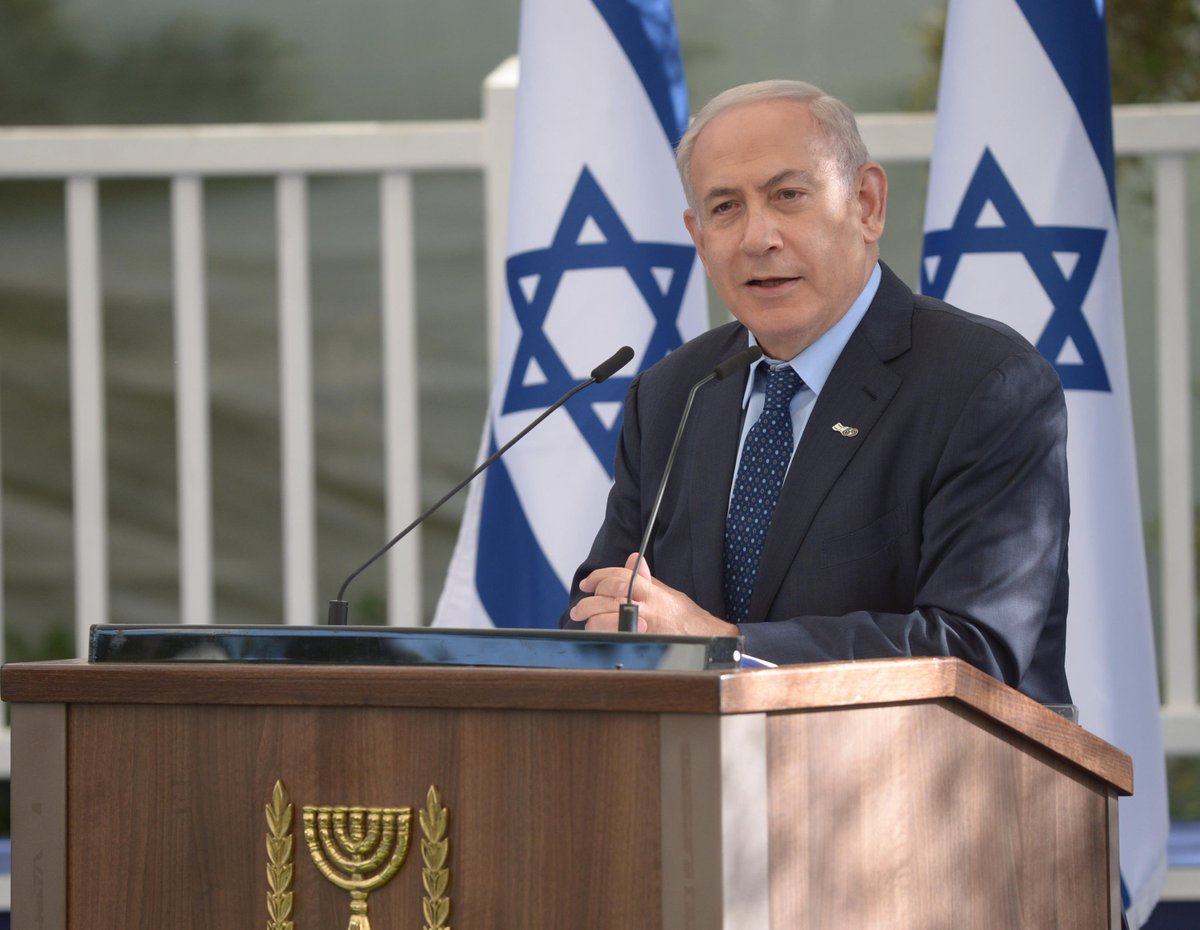
Prime Minister Netanyahu’s Greeting on Israel’s 69th Independence Day
Happy Independence Day to all of our friends around the world!further added byhis tweets ,Israel will not sit by while the organization calls for the denial of our sovereignty in Jerusalem.
Israel eases restrictions on Gaza fishermen
With Abbas presenting new documents to get peace in West Bank the testaments are short of cultivating peace as per Israel version but the nations across the globe want to have peace and hectic efforts are in the intention of US preside-mt but how far this intention and efforts shall be success to buy peace in the region and can help to bring some reprieve in the Syria regions with dialogues moves on for peace.
US President Donald Trump vowed on Wednesday to do “whatever is necessary” to broker peace between Israel and the Palestinians, as he hosted Palestinian President Mahmoud Abbas at the White House, but gave no sign of how he could revive long-stalled negotiations.
In their first meeting, Trump pressed Abbas to do more to stop “incitement to violence” against Israelis and, according to the White House, urged him in private to halt payments to families of Palestinian prisoners held in Israeli jails, a demand long pressed by Israel.
Even as Trump boldly predicted he would achieve peace where other presidents had failed, he stopped short of explicitly recommitting his administration to a two-state solution to the decades-old conflict, a long-standing foundation of US policy.
Some Palestinians said they were disappointed by the omission.
Despite what many experts see as a long-shot bid, Trump told Abbas: “I will do whatever is necessary…. I would love to be a mediator or an arbitrator or a facilitator, and we will get this done.”
Abbas reasserted the goal of a Palestinian state, saying it must have East Jerusalem as its capital with the borders that existed before the 1967 Middle East war. Most Israelis want all of Jerusalem as their capital and reject a full return to 1967 borderlines as a threat to their security.
Trump has faced deep skepticism at home and abroad over the chances for him to achieve any quick breakthrough, not least because his administration has yet to articulate a cohesive strategy for restarting the moribund peace process.
Abbas’ White House talks followed a February visit by Israeli Prime Minister Benjamin Netanyahu, who moved to reset ties after a combative relationship with the Republican president´s predecessor, Democrat Barack Obama.
Trump sparked international criticism at the time, when he appeared to back away from a two-state solution, saying he would leave it up to the parties to decide.
Palestinian statehood has been the objective of successive US administrations and the international community. The meeting with Abbas, the Western-backed head of the Palestinian Authority, was another test of whether Trump, in office a little more than 100 days, is serious about pursuing the kind of comprehensive peace deal that eluded his predecessors.
Trump insisted he was ready to try to reach the “toughest deal.” But when he later sat down to lunch with the Palestinian leader, he said it was “maybe not as difficult as people have thought over the years.”
Trump, who said he decided to “start a process” but offered no new policy prescriptions or timetable, may be underestimating the challenge when trust between the two sides is low, analysts said.
“You can’t just pretend you only have to handle a few key issues and that’s it,” said David Makovsky, a member of Obama’s negotiating team during the last talks, which collapsed in 2014.
Still, plans are being firmed up for Trump to visit Netanyahu in Jerusalem and possibly Abbas in the West Bank on May 22 and 23, say people familiar with the matter.
That has sparked speculation about a meeting of the three US and Israeli officials have declined to confirm the visit.
Trump and Abbas appeared friendly but businesslike as they stood at side-by-side lecterns. But that was a far cry from the way Trump and Netanyahu interacted in February.
Abbas promised that under “your courageous stewardship and your wisdom, as well as your great negotiating ability,” the Palestinians would be partners seeking a “historic peace treaty.”
But under pressure at home to avoid major concessions, the 82-year-old leader said: “It’s about time for Israel to end its occupation,” referring to Jewish settlements in the West Bank.
Abbas, however, did not repeat in public his demand that Israel freeze settlement construction on land Palestinians want for a state as a condition for negotiations.
US lawmakers have warned that Palestinian funding could be cut off unless Abbas halts PLO stipends to families of prisoners whom Israel considers terrorists but many Palestinians see as heroes.
There was no indication Abbas, who governs in the West Bank while Hamas rules Gaza, bowed to pressure on the issue, especially with hundreds of Palestinian prisoners on hunger strike.
In Gaza, Hamas spokesman Sami Abu Zuhri said the promises Abbas made at the White House “don´t obligate anyone.”
Questions have been raised about Trump´s choice of son-in-law Jared Kushner to oversee the peace initiative, along with Trump’s longtime business lawyer, Jason Greenblatt, as envoy.
Efforts to enlist Israel´s Sunni Arab neighbors, who share Israeli concerns about Shi´ite Iran, to help rejuvenate peacemaking, have yet to yield results.
National security adviser H. R. McMaster described Trump’s foreign policy approach as “disruptive,” saying his unconventional ways could create an opportunity to help stabilize the Middle East.
But Trump’s unpredictability has even at times rattled a close ally like Israel.
His pro-Israeli campaign rhetoric suggested he might give Netanyahu free rein. But Trump’s promise to move the US embassy to Jerusalem from Tel Aviv is on the back burner, and he caught Netanyahu off-guard by asking him to put unspecified limits on settlement activity. Media agencies

Tuesday, 2 May 2017

INDIA TO CLOCK 7.1% GDP THIS YEAR : UNITED NATIONS

bcgs_tajuddin


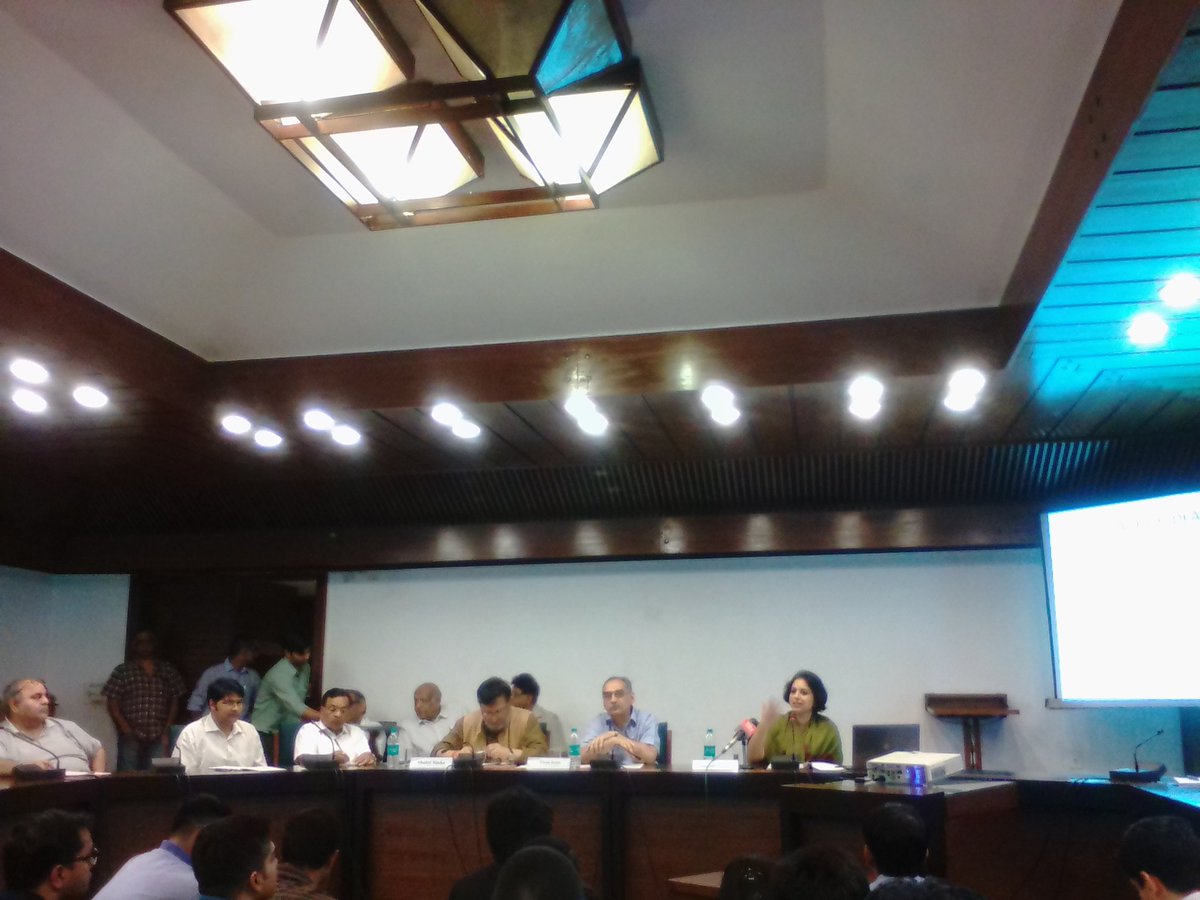
Mr. Naresh Kumar Sagar interacting with the panelists during Press Meet
02.05.2017 15:19:06 – India to clock 7.1% GDP this year : United Nations
(live-PR.com) – UN report has said, India is expected to achieve 7 point 1 per cent growth this year as re-monetisation restores consumption, and infrastructure spending increases. The UN Economic and Social Commission for Asia and the Pacific or ESCAP launched its annual flagship report ‘The Economic and Social Survey of Asia and the Pacific 2017’ yesterday.
The report said, India’s growth 
would edge up to 7.5 per cent next year. It however, warned that the country faces heightened risks related to the concentration of bad loans in the public sector banks.
According to ‘The Economic and Social Survey of Asia and the Pacific 2017’ report released by United Nations , India is likely to clock 7.1 % growth this year as “re-monetisation restores consumption, and infrastructure spending increases, before edging up to 7.5 % in 2018 , warning that the country faces heightened risks related to the concentration of bad loans in the public sector banks.
The UN Economic and Social Commission for Asia and the Pacific (ESCAP) in its annual flagship report launched recently said that Indian economic growth is anticipated to be stable at 7.1 % in 2017 before edging up to 7.5 % in 2018, underpinned by higher private and public consumption and increased infrastructure spending.
As per the report ,the gross non-performing assets ratio in public sector banks reached almost 12 % in 2016, which points to the need for “bank recapitalisation”. Inflation is expected to reach 5.3-5.5 % in 2017 and 2018, being somewhat above the official target of 4.5-5 % .
While the impact of demonetisation on the economy is likely to be temporary, a slower-than-expected revival would predominantly lessen the outlook for cash-intensive sectors and supply chains for agricultural products.
Notwithstanding its short-term disruptions, the report said one of the medium-term benefits of demonetisation was to help expand banking sector liquidity. “The country’s medium-term economic development will also benefit from recent reforms that are aimed at easing domestic supply bottlenecks, such as the implementation of the goods and services tax, amendment of a bankruptcy law and opening up of the pharmaceuticals, defence and civil aviation sectors,” it said.
Fixed investment continued to contract as stressed corporate balance sheets suppressed firms’ appetite for additional spending.
Overall, the still rapid output growth in 2016 benefited from a modest recovery in agriculture due to an improved monsoon season and robust growth in public administration following public sector salary increases, it said.
Despite the overall fiscal tightening, capital expenditure under the budget for fiscal year 2017/18 is about 25 per cent higher than that in the preceding budget.
The report tinted that in spite of a largely positive economic outlook for 2017, Asia-Pacific economies are vulnerable to rising global uncertainty and trade protectionism. The region’s developing economies are expected to grow at 5 % and 5.1 % in 2017 and 2018 up from 4.9 % last year.The projected moderate Asia-Pacific economic growth faces risks from rising protectionism and global uncertainty, it added.
The report estimates that a steeper-than-anticipated increase in these factors could reduce average regional growth in 2017 by up to 1.2 percentage points.It has been emphasised that better governance for effective mobilisation and use of fiscal resources is critical to advancing the 2030 Agenda for Sustainable Development.
Please contact for any query related to this mail to Ms. Neha Gupta, Research Associate at neha.gupta@phdcci.in with a cc to Dr. S P Sharma, Chief Economist at spsharma@phdcci.inand Ms. Megha Kaul, Associate Economist at megha@phdcci.in , PHD Chamber of Commerce & Industry.
Contact information:
sagar Media inc
Contact Person:
Naresh Sagar
Phone: 9810974027
Author:
Naresh Sagar
e-mail
Phone: 9810974027

SUCCESSFUL AUCTION OF ONE LIMESTONE BLOCK IN RAIPUR DISTRICT CONCLUDES

Successful auction of one limestone block in Raipur District concludes; estimated cumulative revenue of Rs 11,894 Cr to State
22 Blocks auctioned till date; estimated value of over 1 lakh Cr disposed off in transparent manner 

The State Government of Chattisgarh has successfully auctioned one block of Limestone (Kesla II) in Raipur District with reserves of 215 million tonnes as on today. The preferred bidder for this block is M/s Dalmia (Bharat) Cement. This block has an estimated value of mineral resource of Rs 10,367crores. With a reserve price of 5 %, the block received a highest bid of 96.15% which translates into estimated cumulative revenue of Rs 11,894 crores to State Government over the lease period. The additionality to States’ exchequer through auctions only, works out to be Rs.9,968 Crores over the lease period whereas Royalty, District Mineral Foundation (DMF) and National Mineral Exploration Trust (NMET) would contribute Rs 1,720 Crore, Rs 172 Crore and Rs 34.4 Crore respectively.
With this successful auction of one limestone block in Raipur District, a total of twenty two blocks with estimated value of resources over 1 lakh Crore has been disposed of in a transparent manner till date. The total estimated revenue accrued to the State Governments over the lease period stands at Rs 85,253 Crores with Rs 67,502 Crore as additionality to the State’s exchequer through auctions.  Out of this the cumulative Royalty, District Mineral Fund (DMF) and National Mineral Exploration Trust (NMET) contributions work out to be Rs. 17,752 Crores (Rs. 15,850 Crores, Rs.1,590 Crores and Rs.317 Crores, respectively).

INDIA’S HUMAN RIGHTS RECORD TO BE REVIEWED BY UNIVERSAL PERIODIC REVIEW


download
Media Advisory

India’s human rights record to be reviewed by Universal Periodic Review

GENEVA (1 May 2017) – India’s human rights record will be examined by the UN Human Rights Council’s Universal Periodic Review (UPR) Working Group for the third time on Thursday, 4 May 2017 in a meeting that will be webcast live.

India is one of the 14 States to be reviewed by the UPR Working Group during its upcoming session taking place from 1 to 12 May, which also marks the commencement of the third UPR cycle.  India’s first and second UPR reviews took place in April 2008 and May 2012, respectively.

The documents on which the reviews are based are: 1) national report – information provided by the State under review; 2) information contained in the reports of independent human rights experts and groups, known as the Special Procedures, human rights treaty bodies, and other UN entities; 3) information provided by other stakeholders including national human rights institutions, regional organizations and civil society groups.

Among the issues raised in the above-mentioned documents are: addressing discrimination, stigmatization and violence against Dalits (“scheduled castes”); limits on free speech and on the work of human rights defenders; attacks on religious minorities; reports of excessive use of force by security officers, including in Jammu and Kashmir; combatting impunity and ensuring accountability; delays in judicial proceedings; eliminating criminalization of same-sex relations; combatting violence against women, human trafficking, early and forced marriages, violence against children and child labour; tackling harmful traditional practices, such as “honour killings”; ensuring business sector complied with human rights and labour standards; combatting extreme poverty and the situation of landless people; improving access to safe water and sanitation; inequalities in access to health services, and high levels of neonatal mortality, stunting, malnutrition and underweight children; and girls’ school attendance.

The three reports serving as the basis for the review of India on 4 May can be found here: http://www.ohchr.org/EN/ HRBodies/UPR/Pages/ INSession27.aspx

Location: Room 20, Palais des Nations, Geneva
Time and date: 14.30 – 18.00, Thursday, 4 May (Geneva time, GMT +1 hour)

The UPR is a unique process which involves a periodic review of the human rights records of all 193 UN Member States.  Since its first meeting was held in April 2008, all 193 UN member States have been reviewed twice within the first and second UPR cycles.  During the third UPR cycle, States are again expected to spell out steps they have taken to implement recommendations posed during their previous reviews which they committed to follow-up on, as well as to highlight recent human rights developments in the country.

The delegation of India will be headed by Mr. Mukul Rohatgi, Attorney General

The three country representatives serving as rapporteurs (“troika”) for the review of India are: Latvia, the Philippines and South Africa.

The webcast of the session will be at http://webtv.un.org

The list of speakers and all available statements to be delivered during the review of India will be posted on the UPR Extranet at the following link [username:  hrc extranet (with space); password: 1session]: https://extranet.ohchr.org/ sites/upr/Sessions/27session/ India/Pages/default.aspx

The UPR Working Group is scheduled to adopt the recommendations made to India at 17.00 on 9 May.  The State under review may wish to express its positions on recommendations posed to it during their review.  The recommendations will be shared with the media on this day in advance.   

INDIA GO DOWN FIGHTING AGAINST AUSTRALIA


~ Lose 3-1 in their third match at the 26th Sultan Azlan Shah Tournament 2017 ~

Ipoh (Malaysia), 02 May 2017: A resilient India went down fighting in their game against defending champions Australia in a thriller of an encounter here at the 26th Sultan Azlan Shah Tournament 2017 on Tuesday. It was Eddie Ockenden (30’), Tom Craig (34’) and Tom Wickham (51’) who were responsible for Australia’s 3-1 win while India’s lone scorer was Harmanpreet Singh (26’).

Played in front of a vocal Malaysian crowd who rallied behind India, there was no doubt this top of the table clash between previous edition’s finalists was going to be played with pace and skill, and the teams didn’t disappoint.

It was Australia’s Tyler Lovell who had a busier first quarter in goal, his saves keeping Australia from dropping behind too early in the game. He padded away a fiercely-struck flick by dragger Rupinder Pal Singh in the ninth minute. India had won another PC earlier in the quarter but Harmanpreet Singh unfortunately couldn’t get his stick on the ball. A brilliant opportunity went amiss in the 11th minute when an instinctive Akashdeep Singh tried to get a reverse stick to deflect the ball into the post but Pardeep Mor’s pass was slightly wide. Though Australia began their attack with a PC in the very first minute of the match, P.R Sreejesh was exceptional to save Trent Mitton’s dragflick. 

After ending the first quarter in stalemate, India made the first breakthrough when a nonchalant Harmanpreet Singh showcased his ability to double up as a forward when he dribbled past Aussie defenders into the circle to score a sensational field goal in the 26th minute. India’s 1-0 lead, however, didn’t last long enough with Eddie Ockenden converting a goal from a rebound in the 30th minute to go into the half-time at 1-1. 

The third quarter saw India’s Akash Chikte who had replaced an injured Sreejesh in the first quarter, make several saves but the Australians were continuously looking for opportunities to get ahead of India. After a series of failed attempts at converting a PC, Australia’s lead came in the 34th minute through Tom Craig who came up with an improvised shot on goal after being assisted by his skipper Matthew Swann. This was Craig’s fifth goal of the tournament after he got a hat-trick against Malaysia.

Having conceded two crucial goals, it was important India played tactically in the final 15 minutes. But the Australians kept the pressure on and it didn’t help when Tom Wickham was unstoppable in the circle as he converted a goal in the 51st minute to take Australia’s lead to 3-1 and eventually win the game to stay on top pf the table in the league stage.

TAGAM MIBANG DEVELOPED A NEW ALTERNATE MEDICINE AND HARMONIOUS LIVING SYSTEM NAMED AS “COSMIC SUPRA-SCIENCE AND SUPRA-INTELLIGENCE LIVING AND HEALING”


IMG_6384Image may contain: 1 person, indoor
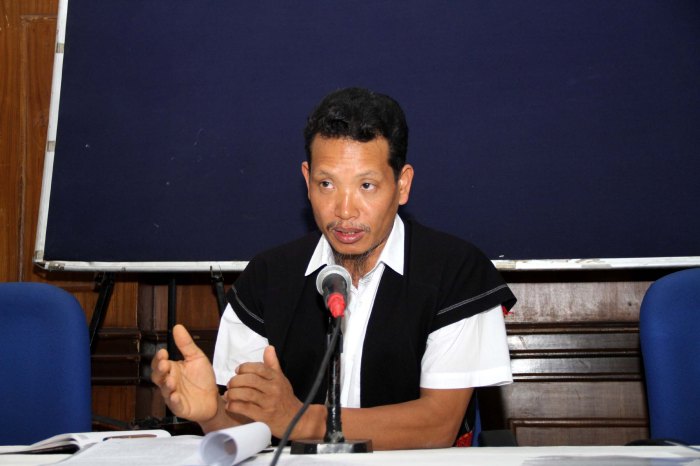
Tagam Mibang of Aalo Town in Arunachal Pradesh, India developed a new Alternate Medicine and Harmonious Living System named as “Cosmic Supra-science and Supra-intelligence Living and Healing”
CSSLH can help achievement of the global health targets in a span of few months or a year although with proactive and progressive participation and vital contribution from every member of the strong 7.48 billion humanity flourishing on Earth- Tagam Mibang

 New Delhi: 2nd May 2017 : Tagam Mibang of Aalo Town in Arunachal Pradesh, India developed a new Alternate Medicine and Harmonious Living System named as “Cosmic Supra-science and Supra-intelligence Living and Healing”. While addressing a press conference here at Press club of India in Delhi, Tagam said to the media , “This press conference has been called to announce a new Alternate Medicine and Harmonious Living System developed byme  which is named as “Cosmic Supra-science and Supra-intelligence Living and Healing” or in short “CSSLH”. He  said ,new system has been originally and solely discovered and developed by me  after a long research and experimentation for about 27 years and because of its influence, I have  been living a highly healthy life without any illness and medication for the last 16 years.
 Mr. Tagam Mibang said that the CSSLH system has planned to introduce at least 20 new revolutions worldwide for achievement of universal goal of harmonious and blissful living for every member of humanity and other beings on Earth. The CSSLH has tremendous role to play in achievement of various Sustainable Development Goals of the humanity spelt out by the United Nations and the World Health Organization, and it is assured that, it can help achievement of the global health targets in a span of few months or a year although with proactive and progressive participation and vital contribution from every member of the strong 7.48 billion humanity flourishing on Earth. The CSLHS is ready with plans for starting and opening of healing & learning centers within India and all countries across the world.The CSSLH has already written and requested the governments of India, United States, Canada, United Kingdom, China, Japan, Singapore and Australia, and also to the United Nations and the World Health Organization for giving an opportunity of presentation, recognition and operations for benefits of the people.
 Mr. Tagam explains that CSSLH system has the following components:- Cosmic Supra-science & Supra-intelligence Healing and Harmonizing Art(CSSHHA)-I: 24 Steps of spiritual, mental and physical regimen especially for rejuvenation and healing of internal organs, brain and nervous system in addition to whole body system, and development of supra-intelligence of an human body system.
Cosmic Supra-science & Supra-intelligence Healing and Harmonizing Art-II: 200 steps of spiritual, mental and physical regimen for rejuvenation and healing of human soul, mind and body, and development of supra-intelligence of a human system.
 Cosmic Supra-science & Supra-intelligence Power & Defense Art: 200 steps of spiritual, mental and physical regimen of unarmed combat and defense skills; strengthening, healing and rejuvenation of soul, mind and body in addition to development of Supra-intelligence of human system.
Cosmic Supra-science & Supra-intelligence Relaxation and Tranquility Art (CSSRTA): 9-Steps regimen for attainment of states of deep relaxation and transcendental tranquility for healing and rejuvenation of soul, mind and body, and development of supra-intelligence of a human system.
 Cosmic Supra-science and Supra-intelligence Omniscience Fusion Art(CSSOFA): The regimen for learning skills to unravel, understand and experience the existence, evolution and  functioning of omniscient, omnipotent & omnipresent processes of Cosmos; development of supra-intelligence of human system; synchronization,  integration and fusion of human supra-intelligence  with the omniscient flow of Comic Soul for harmonious and blissful living experience each ticking moment of life, lifetime and into eternity.
CSSLH Philosophy-I: Comprehensive text material about prevention and cure of all existing and known human diseases; new concepts and definitions about good health; identification and definition of new form of human diseases and their healing solutions.
CSSLH Philosophy-II: Comprehensive text material about truth, nature and purpose of existence of Cosmos, Earth, humanity & individual human system; Cosmic thoughts and activities to be followed by human beings each evolving moment of life and whole lifetime for continuous attainment of integrated, harmonized, healthy, orderly, rejuvenating and blissful states of existence for themselves, humanity, other innumerable living beings, planet Earth and Cosmos as whole.
The CSSLH     system invokes core truths, absolute knowledge, highest intelligence and omniscient science which are the basis of continuous evolution and functioning of Cosmos, planet Earth along with its infinite entities including human beings. The realm of ultimate, infallible, indisputable, progressive and sacred knowledge developed under CSSLH covers every aspect of human system, body, mind, soul and it is relevant and effective in prevention and cure of all kinds of existing diseases that afflict human beings, and it also includes new definition of good health, identification and definition of new human diseases with their new healing solutions. For all kinds of human disease and causes of sufferings; reproductive, maternal, newborn and child health; infectious diseases; NCDs and mental health; injuries and violence; need for strengthening and augmentation of health systems, health financing and health expenditure; the CSSLH system has immense potential to contribute, supra-scientific, supra-intelligent, highly effective, fully natural, eco-friendly, highly cost-effective, complementary, preventive, curative and holistic healing solutions; augmentation of health systems including health workforce, drastic reduction in healthcare cost; educative, enlightening and transforming role for betterment of humanity.
The healing knowledge system under CSSLH being supra-scientific, supra-intelligent, highly effective, eco-friendly, extremely cost-effective, complementary, preventive, curative and holistic,  and complemented by highly vast harmonious living knowledge has promising potential to bring revolutionary transformation and contribution towards achievement of highest state of good health and harmonious living for humanity as whole and other countless living beings on Earth, each ticking second of their life and whole lifetime; and for the present as well as countless upcoming generations in the infinite future.
The CSSLH system has also delved into every sphere of knowledge that touches human lives and it will come up with creative solutions to all existing problems of humankind on Earth like political and geopolitical ; wealth &  economic issues; spirituality; widespread social problems, divisions, hatred,  crime, widespread violence & war, forced displacement & humanitarian problems; challenges of scientific & technological developments, problems of industrialization, accidents; pollutions of air, water, food, environment; widespread environmental damage, natural disasters & other climatic extremities besides others.
The other objectives of the proposed press conference are as follows:-To convey message to whole humanity about the new system with appeal to get proactively engaged with CSSSLH to wipe out all problems confronting them with creative and God ordained solutions.
1.      To request, appeal and advice the Governments of India, United States, Canada, United Kingdom, China, Japan, Singapore and Australia, and also to the United Nations and the World Health Organization for giving an opportunity of presentation, recognition and operations for benefits of the people.
2.      To request and appeal governments of all other countries around the world to work with CSSLH for greater benefit of humankind.
3.      To appeal and request various governments, multinational institutions, companies, Non Governmental Organizations, other institutions and every other member of 7.5 billion humanity as whole to engage and work with Sri Tagam Mibang and CSSLH, and to donate for carrying forward activities of global healing and harmonious transformation with the objective and goal of harmonious existence of humanity in the present generation and for the upcoming infinite generations.
4.      To connect in Facebook at www.facebook.com/tagammibang
5.     To connect in Twitter at @TagamMibang
6.     6. To write in Email at tagammibang@gmail.com