Wednesday, 3 January 2018

Pak adopts Chinese yuan for trade, investment

Pakistan  allow the Chinese yuan to be used for imports, exports and financing transactions for bilateral trade and investment activities, in a move economists said Wednesday would simplify a massive Chinese investment project.
Both public and private sector enterprises may use the yuan for bilateral trade and investment, the central State Bank of Pakistan said in a statement issued Tuesday.
“As per current foreign exchange regulations, Chinese Yuan (CNY) is an approved foreign currency for denominating foreign currency transactions in Pakistan,” it said.
“In terms of regulations in Pakistan, CNY is at par with other international currencies such as USD, Euro and JPY,” it added.
The bank said that in light of a massive Chinese infrastructure project in Pakistan, the move would “yield long-term benefits for both the countries”.
The China-Pakistan Economic Corridor (CPEC), a $54 billion project launched in 2013 linking western China to the Indian Ocean via Pakistan, has been hailed as a “game changer” by Pakistani officials.
They hope the power stations and transmission lines built as part of the project will help ease Pakistan´s chronic power crisis.
Economic analyst and former government adviser on finance Salman Shah welcomed the State Bank´s move, saying that avoiding dollar transactions in the implementation of CPEC would “simplify matters very considerably”.
The Chinese economy is now one of the biggest in the world, he said, justifying the use of the Chinese currency of choice

Khamenei blames Iran’s ‘enemies’ for unrest
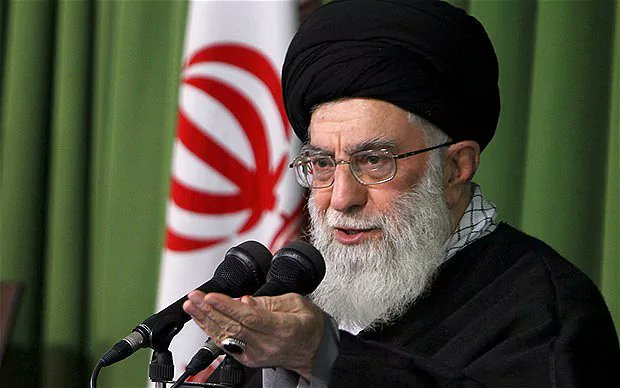
Iran’s supreme leader Ayatollah Ali Khamenei blamesenemies for unrest that has seen 22 deaths as Washington sought to increase pressure on regime that is facing its biggest test in years. Khamenei gave his first reaction to the unrest that has spread across Iran in recent days. Khamenei said the enemies of Iran are trying to create troubles for the Islamic Republic. The protests that began in the northeastern city of Mashhad on Thursday over unemployment and a jump in prices have expanded to more than 40 cities. Some of the demonstrators are voicing rare criticism of the Islamic establishment headed by the supreme leader.

EU foreign policy chief Federica Mogherini late Tuesday deplored “the unacceptable loss of human lives” and called on “all concerned to refrain from violence”.
Trump´s ambassador to the UN, Nikki Haley, said the US would seek emergency UN talks on the situation.
“The people of Iran are crying out for freedom,” she said at a news conference. “All freedom-loving people must stand with their cause.”
Haley rejected as “complete nonsense” Khamenei´s charges that the protests were being fomented by Iran´s “enemies”.
“The freedoms that are enshrined in the United Nations charter are under attack in Iran. Dozens have already been killed. Hundreds have been arrested,” she said.
“If the Iranian dictatorship´s history is any guide, we can expect more outrageous abuses in the days to come.”
Khamenei blames ‘enemies‘ Iran’s supreme leader yesterday blamed the country’s “enemies” for days of unrest that have seen 21 killed and hundreds arrested in the biggest test for the Islamic regime in years.
As violence has grown, authorities have stepped up arrests, with at least 450 people detained in Tehran since Saturday and 100 more around Isfahan on Monday, media reported.
 Iran’s supreme leader blamed “enemies” Tuesday for unrest that has seen 21 deaths as Washington sought to increase pressure on the regime that was facing its biggest test in years.
In a speech carried on state television, Ayatollah Ali Khamenei broke his silence on the protests for the first time since they erupted last Thursday.
“The enemies have united and are using all their means, money, weapons, policies and security services to create problems for the Islamic regime,” the supreme leader said.
“The enemy is always looking for an opportunity and any crevice to infiltrate and strike the Iranian nation.”
Even reformists, who backed the last major protest movement in 2009, condemned the unrest and the support it has received from the United States.
But they also urged the authorities to address economic grievances that have fuelled the protests.
“The Iranian people are confronted with difficulties in their daily lives… and have the right to peacefully demand and protest,” said a statement from the Association of Combatant Clerics, headed by reformist ex-president Mohammad Khatami.
media agencies and tweets

Security beefed up Mumbai and other cities

In Mumbai: Metro services of the AC local has been suspended for the day in view of the protests. Other suburban services are being run amid intermittent protests at Elphinstone Road, Goregaon, Dadar, Malad stations. There is no cancellation of long distance trains so far. In Pune, barring a couple of incidents of stones being pelted on public transport buses, the “bandh” in Pune started on a peaceful note. The shutdown received a mixed response in the city since morning with some shops doing business with their shutters partially up.
Additional Commissioner of Police (South/North Region) Ravindra Sengaonkar said that there were two instances of stone-pelting, one in Sukhsagar Nagar and second in Singhgad Road on buses of Pune Mahanagar Parivahan Mahamandal Limited.
According to PMPNL, since Tuesday, 42 buses from its fleet were stoned and since Wednesday morning, the number of buses being hit by stones stood at around 10 to 12.
“Buses are being plied under instructions from the police,” said a PMPMl officer. Several private schools remained shut as a precautionary measure despite there being no official holiday being declared for educational institutions.
Heavy security has been deployed in Mumbai and other cities on the backdrop of Maharashtra Bandh today. Prakash Ambedkar, the Bharipa Bahujan Mahasangh leader has called a ‘Maharashtra bandh’ to protest against the government’s alleged failure to stop the violence. He has appealed for peace during the bandh period.
Chief Minister Devendra Fadnavis has also appealed for calm and ordered a judicial inquiry by a sitting judge of the Bombay High Court into the Pune violence.
No untoward incidents of violence are reported from across the state. Local trains, city buses, taxies and other private transport services are running smoothly in the city.
Government offices, schools and colleges in Mumbai are open but school buses in tense areas are off roads in Mumbai as a safety measure. The School Bus Owners’ Association has said it would not operate its fleet of 40,000 buses. Dabbawala’s services will remain closed today in Mumbai.
The Rashtriya Swayamsevak Sangh has condemned the incidents of violence and appealed to the public to maintain unity and harmony in the society.
Leaders across the parties have also appealed people to maintain calm and not fall prey nefarious tactics to divide society over castes. Several towns and cities in Maharashtra were on edge yesterday as Dalit protests against violence in Bhima Koregaon in Pune district.

Iran’s security and stability depend on its own people

 Thousands of people in Eastern of Kurdistan & Iranhave been detained due to their participation in the recent protest.
I will keep my brothers in Iran with me in my thoughts as they continue to protest a torturous regime that has attempted to take basic human rights away from Iranians.   
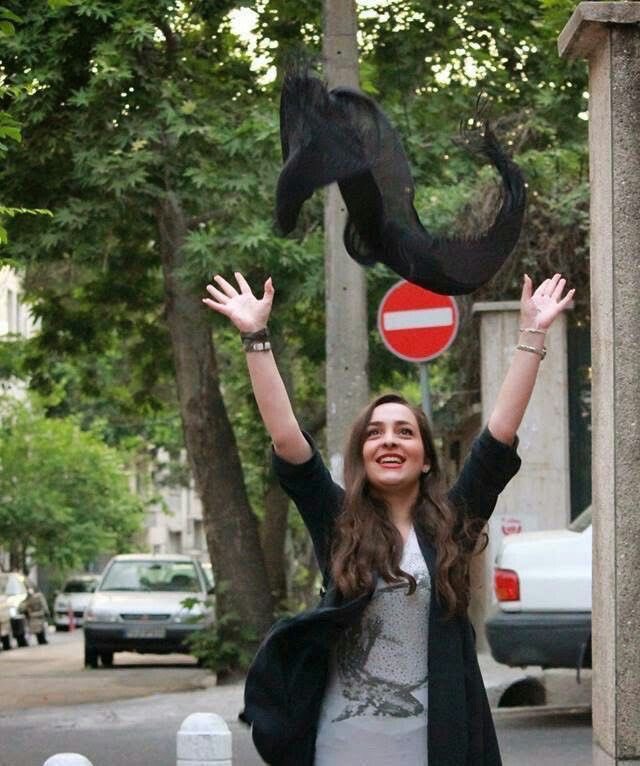
Warrior woman 
171230172246-04-iranian-student-protests-exlarge-169.jpg
 Crowd of 100 attack a military base with fire bombs.Defenders ward them of with warning shots. Contrary to what’s being reported,Iranian police/forces are usually acting with EXTREME RESERVE.This is why agent provocateurs can get so close.What would US police do huh?

France concerned by Iranian protests, No comment on FM visit

Paris is concerned by the number of deaths, injuries and arrests in anti-government protests across Iran, a French Foreign Ministry spokesman said. “The right to protest is a fundamental right,” he said as cited by Reuters. The spokesman also declined to comment if this week’s planned visit of French Foreign Minister Jean-Yves Le Drian to Tehran was still on the cards. Around 20 people have been killed and over 450 arrested during the six days of unrest across Iran, according to state television. Media agencies

US President:I too have a Nuclear Button, my Button works!

President Donald Trump has fired off a tweet against North Korean supreme leader Kim Jong-un, claiming to have a “more powerful” nuclear weapons launcher.
Trump’s tweet, amid a barrage of angry posts, is a belated response to Kim’s New Year speech, in which the North Korean leader claimed, “The entire United States is within range of our nuclear weapons, and a nuclear button is always on my desk.”
North Korean Leader Kim Jong Un just stated that the “Nuclear Button is on his desk at all times.” Will someone from his depleted and food starved regime please inform him that I too have a Nuclear Button, but it is a much bigger & more powerful one than his, and my Button works!
“This is reality, not a threat,” Kim said, adding that “these weapons will be used only if our security is threatened.”


Tuesday, 2 January 2018

Government is in talks with the Congress and other opposition parties for the smooth passage of Muslim Women (Protection of Rights on Marriages) Bill 2017 in the Rajya Sabha.

Talking to reporters outside Parliament, Parliamentary Affairs Minister Ananth Kumar said the Bill is expected to be taken up in the Upper House today or tomorrow. He expressed hope that Congress, as it had not pressed amendments in the Lok Sabha, to support the bill in the same manner in the Rajya Sabha.

Minister of state for Parliamentary affairs Vijay Goel said the Tripple Talaq Bill is related to the women pride and dignity and it should not be connected to any religion. Last week, the Lok Sabha had passed the Bill by a voice vote rejecting some amendments moved by opposition members.

Although Congress had supported the Bill in the Lower House while objecting to some of the provisions, some opposition parties in the Rajya Sabha are demanding to send the legislation to the select committee.

The Bill aims at protecting the rights of married Muslim women and to prohibit divorce just by pronouncing talaq by their husbands and have penal provisions

Iran says Saudi, U.S., UK behind anti-gov’t protests

A senior Iranian security official said Saudi Arabia, the U.S. and Britain are major players behind recent anti-government protests, Press TV reported Tuesday.
Certain countries are waging a “proxy war” against the Islamic republic via social media and the internet, Ali Shamkhani, secretary of Iran’s Supreme National Security Council (SNSC), was quoted as saying.
The United States, Britain and Saudi Arabia are behind the recent riots in Iran, he said, adding that the hashtags and social media campaigns in Iran are all being guided by these countries.
“Based on our analyses, around 27 percent of the new hashtags against Iran are generated by the Saudi government,” the Iranian official said.
Shamkhani also said this foreign-backed intervention is aimed at hampering Iran’s progress in different spheres.
“What is happening in Iran will be over in a few days, and there is no reason to worry at all,” he noted.
Inputs http://www.xinhuanet.com

Monday, 1 January 2018

Protests across Iran enter sixth day

 Fresh protests broke out as night fell in Iran Monday with reports of a policeman shot dead, as the authorities moved to crack down on days of unrest across the country.
There was a heavy police presence in Tehran as small groups of protesters ran through the city centre shouting anti-regime slogans, local agencies reported.
Some arrests were made before calm returned to the capital, reports said.
State television said one policeman had been killed and three others wounded by fire from hunting rifles in the city of Najafabad in central Iran.
The latest demonstrations came despite President Hassan Rouhani´s vow that the nation would deal with “rioters and lawbreakers”.
Media cited Ali Shamkhani, secretary of Iran´s Supreme National Security Council, as blaming the violence on social media.
“Hashtags and messages about the situation in Iran come from the United States, Britain and Saudi Arabia,” he said.
“What is happening on social networks concerning the situation in the country is a proxy war against the Iranian people.”
Germany calls for calm in Iran, urges respect for right to protest
US President Donald Trump, who has repeatedly criticised Tehran over four days of demonstrations, said it was “time for a change” and that Iran´s people were “hungry” for freedom.
The intelligence ministry released a statement saying “rioters and instigators” have been identified “and will be dealt with seriously soon”.
The Revolutionary Guards published photos of three wanted people and called on the public to report any “seditionist elements”.
 Thousands of pro- and anti-government demonstrators have taken to the streets across Iran since Thursday. The anti-government protests were prompted mostly by discontent over economic hardship and alleged corruption.
DSa8RJCWkAUbLpQ.jpg
Tehran – #Iran, Dec 30, 2017 – Third day of Public protestagainst high prices In this clip on the main entrance of the #Tehran University , students are chanting slogan: “#Khameneishame on you, let go the country” #FreeIran #RegimeChange#Iranprotests

Nine people were killed overnight as protests across Iran entered a sixth day, AP reported citing Iranian state television, adding that all victims had been shot with hunting rifles.
Iranian state TV, said, that at least 10 people had been killed in the nationwide unrest. Over 400 people have reportedly been arrested following the protests, according to AFP data from Sunday.
Six protesters were among those killed in the town of Qahdarijan on Monday night, the state TV said, adding that the rioters had attempted to steal guns from the police station. Also an 11-year-old boy and a 20-year-old man were killed in the town of Khomeinishahr. The ninth fatality was a member of Iran’s paramilitary Revolutionary Guard in the town of Najafabad.
Monday, Iranian President Hassan Rouhani said that the protests may have been partially stirred up by external forces interested in destabilizing the country. “The enemies of the Islamic Republic of Iran are angry with the glory, success, and the progress of the Iranian nation; and they have vowed to bring the regional troubles to Iran,” he said, according to the Mehr news agency.
The overall death toll after six days of unrest has reached 20 people, according to state TV.
Pro- and anti-government demonstrations have been taking place in Iran since Thursday. Economic hardship and alleged corruption mostly prompted the anti-government rallies.
Russian President Vladimir Putin and Israeli Prime Minister Benjamin Netanyahu have had a phone conversation and agreed to hold a meeting, according to the Russian leader’s press secretary, Dmitry Peskov. The two leaders plan to “discuss the current matters of bilateral relations and exchange opinions on various international and regional issues,” Peskov said. They also exchanged New Year’s greetings, he added.
Moscow considers the ongoing unrest in Iran an internal matter and will regard any outside interference to be unacceptable, the Russian Foreign Ministry said on Monday. “We express the hope that the situation won’t develop into a scenario of bloodshed and violence,” the ministry said in a statement quoted by Russian news agencies. “External interference destabilizing the situation is inadmissible.” Protests have been ongoing in Tehran and other cities since last week, and state TV has reported that at least 10 people have been killed.
Media agencies

West Asia Digest by Ambassador Talmiz Ahmad

Ambassador Talmiz Ahmad
Adviser, West Asia & North Africa, Ananta Centre
Former Indian Ambassador to Saudi Arabia, Oman & UAE
1 January 2018 
I Political Developments1. Iran: On 14 December, the US defence department displayed at a hangar at a joint base at Anacosta-Bolling, Washington, three intact Iranian weapon systems and debris from a fourth, apparently recovered from the battlefields of West Asia. Recalling President Trump’s Iran strategy announced in October, the department spokesperson said these missiles were proof of Iran’s malicious strategy, specifically “evidence of Iranian weapons proliferation in violation of U.N. Security Council resolutions 2216 and 2231”. The weapons systems on display were retrieved from battlefields by U.S. partners in the region — primarily Saudi Arabia and the United Arab Emirates, the spokesperson said.

The four systems were a short-range ballistic missile, an antitank guided missile, an unmanned aerial vehicle and exploding boat technology. There were pieces of two Iranian Qiam missiles launched from Yemen into Saudi Arabia, one had targeted the Yanbu oil facility, while the other was aimed at King Khalid International Airport, Riyadh.
Another piece of equipment was an Iranian-made antitank guided missile called a Toophan, obtained by Saudi Arabia. The missile is a high-precision, direct-fire weapon with a range of about 2.4 miles. The Houthis in Yemen use these missiles to target infrastructure and vehicles. The display also showcased a Qasef-1 unmanned aerial vehicle operated by Houthi forces, which was recovered by Saudi Arabia. Finally, the display featured the guidance system from an Iranian Shark-33 boat. This is an explosives-laden, unmanned boat used in an attack the Saudi Arabian frigate, HMS al Madinah.
The Shark-33 has a guidance system allowing it to track and hit a moving target without an operator on board, so the boat can be deployed to blow up a ship without sending someone on a suicide mission. The computer and sensors serve as that unmanned guidance system for the Shark-33. Finally, the boat’s onboard camera captures a still image of its location every time the guidance software turns on.
During the press conference at the hangar where the Iranian equipment was on display, US Ambassador to the United Nations Nikki Haley said that the display was hard evidence that Iran is seeking to destabilize West Asia from the Arabian Peninsula, to Central Asia, to the Levant. She added: “It’s hard to find a terrorist group in the Middle East that does not have Iran’s fingerprints all over it”, and concluded that Iran is “fanning the flames” of conflict. Haley called on all nations of the world to join the United States in resisting Iran as the nation has become “a global threat.”
Haley’s remarks were the latest attempt by the Trump administration to mobilise international opinion to punish Iran for its ballistic missile programme and its role in West Asia. Iran dismissed her assertions. A spokesman at Iran’s mission to the United Nations called them fabricated and part of a pattern of false accusations by Washington. The Iranian foreign minister, Mohammad Javad Zarif, tweeted side-by-side photos of Ms. Haley at her news conference and Colin Powell, the former secretary of state, during his infamous 2003 speech at the United Nations arguing for an invasion of Iraq; “When I was based at the U.N., I saw this show and what it begat”, the minister wrote.
Reza Marashi of the National Iranian American Council (NIAC) notes that Haley had cited a UN report in her claim regarding Iranian missile transfers to the Houthis, but the UN has in fact reached no such conclusion. Instead, a panel of experts had concluded that the fired missile fragments showed components from an Iranian company, but they have “no evidence as to the identity of the broker or supplier.” In fact, analysts from the U.S. Department of Defence, speaking to reporters at Haley’s speech, acknowledged that they do not know the missiles’ origin. Marashi describes Haley’s presentation as her “Colin Powell 2003 moment” in the way she “cherry-picked intelligence in a fashion reminiscent of the 2002-2003 push for invading Iraq”.
Paul Pillar, writing in the National Interest, has also recalled the “Powell moment”, saying: “Now Nikki Haley has provided the closest replication yet of the notorious show-and-tell from 2003. She has tendentiously and selectively brandished pieces, including physical pieces, of intelligence to stir up hostility toward Iran, with which the Trump administration seems intent on picking a fight”. Pillar concludes: “We still don’t know exactly where Trump, Haley, or anyone else in the current administration wants or expects to go with their campaign of stoking maximum tension with, and hostility toward, Iran. But more and more of their campaign sounds a lot like what the Bush administration and neoconservatives were saying about Iraq in 2002 and 2003.”
A report in the New York Times said that Haley’s assertions “fell short of proving her claims”. It pointed out that Defence officials could not say exactly when the weapons were given to the Houthis, which means that they could have been transferred before the Security Council resolution was enacted; in some cases, the officials said that they could not say when the weapons were used. Defence officials were also unable to say exactly where or when the drone, a broken Qasef-1, was found.
2. US’ National Security Strategy: On 18 December, the US’s National Security Strategy (NSS) was released; it mentions Iran twelve times. The first mention castigates the Obama administration’s focus on achieving a nuclear deal with Iran, declaring that the Trump administration is now “confronting the danger posed by the dictatorship in Iran, which those determined to pursue a flawed nuclear deal had neglected.” It goes on to outline many of the activities that Iran is engaged in, including its testing of ballistic missiles and ties to designated terrorist groups, frequently mentioning Iran in the same breath as North Korea.
The document then goes on to say: “We will work with partners to deny the Iranian regime all paths to a nuclear weapon and neutralize Iranian malign influence” and “We will work with partners to neutralize Iran’s malign activities in the region.” However, the NSS does not provide any details on how the administration intends to proceed against Iran, suggesting that the details of an approach to Iran remain elusive.
On the other hand, the GCC countries are likely to welcome the NSS: as Hussain Ibish has noted, the three main goals for West Asia in the NSS – combating “jihadist terrorists,” preventing the domination of “any power hostile to the United States,” and ensuring “a stable global energy market” – are fully consistent with the national interests of the Gulf Arab countries. The latter will also be pleased with references to the value the Trump administration places on alliances with traditional West Asian partners.
Trump’s introductory note asserts: “We have renewed our friendships in the Middle East,” which is what Gulf Arab countries have been seeking after the wilderness years of the Obama administration. They will also welcome the commitment: “We will retain the necessary American military presence in the region to protect the United States and our allies from terrorist attacks and preserve a favourable regional balance of power.”
3. Yemen: The death of former president Ali Abdullah Saleh has overturned the Saudi-UAE strategy of using him to defeat the Houthis and regain the territory under Houthi control, particularly the capital, Sanaa, and the port city of Hodeidah. The UAE now seems to be backing Saleh’s son, Ahmed Ali Saleh, who has rallied Yemeni ground forces still loyal to Saleh and, for now, to Ahmed Ali. These forces are seeking to take territory on the coastal route north from Aden to Hodeidah and, following Saleh’s death, they seem to have air and naval support from the UAE to do so.
Saudi Arabia has broadened its options by re-engaging with the Al Islah, the Islamist party, which also has a variety of tribal and religious elements, it had sponsored as a political coalition in Yemen in 1990 to promote its interests. Al Islah has close links with the Muslim Brotherhood, which has been outlawed as a terror group by both the UAE and Saudi Arabia. The kingdom is now seeking to revive this alliance, and has brought a reluctant UAE on board as well, a significant achievement given the UAE’s hostility towards all Brotherhood-affiliated entities.
On 15 December, the Abu Dhabi-based The National reported that Sheikh Mohammed bin Zayed, Crown Prince of Abu Dhabi, and Saudi Crown Prince Mohammed bin Salman had held talks in Riyadh with the Al Islah party on the previous day. During the meeting, Sheikh Mohammed and Prince Mohammed reviewed the latest developments in Yemen with Al Islah chairman Colonel Mohammed Abdullah Al Yidoumi and Secretary-general Abdulwahab Ahmad Al Anisi.
This was the second time in a month that Mohammed bin Salman had publicly met with the Islah leader, who has spent two years trying to re-establish Islah’s formerly good relationship with the kingdom. After the meeting, Yidoumi praised what the Saudi-led coalition is doing in Yemen. Al-Anisi, the secretary general of Islah, said that the meeting was a “turning point,” and that the party had been asked to reach out to remnants of Saleh’s party to work with his followers against the Houthis. Al Islah militants have been fighting alongside forces loyal to Yemeni president Abd Rabbo Mansur Hadi in Marib province, east of Sanaa, for three years.
In addition to Ahmed Ali Saleh, Saudi Arabia is also still working with General Ali Mohsen al-Ahmar, Ali Abdullah Saleh’s former close military ally and currently Vice President to Abd Rabbo Mansour Hadi. Ali Mohsen has long worked with Salafi fighters and those affiliated with Al Islah.
Separately, in the aftermath of Saleh’s death, the Houthis controlling Sanaa have tightened their grip on the city and its people in recent weeks, shutting off access to the internet, blocking social media sites and sending gunmen to raid the homes of Saleh’s supporters and anyone else they suspect of opposing them. Hundreds of people have been detained, and prices for basic goods like food and fuel are soaring, threatening to exacerbate an already dire humanitarian crisis
4. Saudi Arabia: Saudi Arabia’s crackdown on alleged corruption shows no signs of letting up, with more people being questioned and banks freezing more accounts. There are reports that, almost seven weeks after the purge started, authorities are detaining new suspects and releasing some of those held. The Saudi Arabian Monetary Authority is also asking banks to freeze the accounts of more individuals who are not under arrest and people linked to them.
The authorities are hoping to reach agreements with detainees, who include royals and billionaires such as Prince Alwaleed bin Talal, “within weeks,” Attorney General Sheikh Saud Al Mujib said earlier in December. The kingdom is hoping to recover as much as $100 billion from settlement deals made with detainees. Bank accounts of 376 individuals, all of whom are either detainees or people linked to them, have been frozen as a “precautionary measure,” Al Mujib said. Some suspects being held are starting to make payments to settle cases in exchange for freedom, he said.
The government is setting up an asset management committee to handle the proceeds of settlement agreements. Any funds that are handed over to the state as part of settlement agreements will ultimately go into the budget and be used to fund government projects and services such as education and healthcare.
Nearly two months after the royal purge in early November, Prince Al-Waleed bin Talal, according to the Wall Street Journal, is reported to be resisting pressure by the government to hand over $6 billion. Instead, the prince is said to have offered the government a significant stake in his Riyadh-listed Kingdom Holding that has investments in Citibank, Twitter, Four Seasons hotels, and Disney, and operates a media and entertainment empire. The prince has also insisted that he retain a leadership position in his conglomerate. Kingdom Holding has lost 14 percent of its $8.7 billion market value since Prince Al-Waleed’s detention.
With a fortune estimated by Forbes at $16.8 billion, Prince Al-Waleed reportedly believes that the cash settlement demanded by the government would jeopardise his empire, while indicating an admission of guilt to the corruption charges. Quoting sources close to Prince Al-Waleed, The Wall Street Journal reported that the prince was demanding a proper investigation and was willing to fight it out in court. The paper points out that a court battle would put the government’s assertions of fairness and transparency to the test, besides possibly exposing the limitations of the Saudi judicial system.
5. Syria: On 21-22 December, the Syrian government and some opposition delegations met in Astana at talks convened by the Iranian, Turkish and Russian governments. The three “guarantor” countries later announced that they had agreed on setting up a working group for the release of detainees.
The next talks on Syria’s peace process, titled the Syria National Dialogue Congress, are to take place in the Russian resort city of Sochi on January 29- 30, and are expected to bring together 1500-2000 Syrian politicians from different factions. At this conclave, Russia will seek the setting up of a 21-member constitutional committee that will decide either to write a new constitution or amend the current constitution of 2012.
However, on 25 December, the peace process received a setback when about 40 Syrian opposition groups, including some militant factions, rejected Russia’s planned Sochi conference, saying that Moscow was seeking to bypass a United Nations-based Geneva peace process. They also blamed Russia for committing war crimes in the country.
The opposition statement said: “Russia is an aggressor country that has committed war crimes against Syrians. It stood with the regime militarily and defended it politically and over seven years preventing UN condemnation of [Syrian President Bashar] Assad’s regime.” Moscow says its bombings target militants, but opposition groups and residents say the Russian airstrikes over the last two years ago have caused hundreds of civilian casualties in indiscriminate bombing of civilian areas away from the frontline.
While the Russia-led peace process has halted conflict in large parts of the country, several political issues remain unresolved. The first pertains to Syria-Turkey ties. Turkey is firmly opposed to the participation of Syrian Kurds in the Sochi meeting; so far, President Bashar al Assad had remained non-committal on the subject. However, believing that a tough posture on the Kurds would improve his position in the eyes of President Erdogan, on 18 December, Assad referred to all elements cooperating with the US as “traitors”, which includes the Kurds. But, this got him no plus points with Erdogan: the latter referred to Assad as a “terrorist” who was impossible to work with.
On the question of Kurdish participation in the Sochi talks, Russia appears to be pursuing a balancing act: after talks in Moscow with Sipan Hemo, general commander of the Syrian Kurdish People’s Protection Units (YPG), some weeks ago, Russia seems to have invited about 155 Kurdish participants, pointing out that the Sochi conclave is for the “Syrian people”, not parties. The Syrian Kurdish leaders have accommodated Turkish sentiments by referring to themselves as part of “Autonomous Administration and Political Entities”; also, names that Erdogan was likely to veto are not included in the Kurdish list.
Russia is said to be going ahead with the Sochi congress and is quietly lobbying various opposition groups. Moscow-based commentator Maxim Shukhov has said: “Ensuring the success of the Syrian political settlement and the subsequent transition process is a diplomatic priority for Russia in 2018.” He adds that “Syria will remain at the core of Moscow’s policy in the Middle East”, which will include the destruction of last remnant of jihad – Jabhat Nusra.
Over the last fortnight, both chambers of the Russian parliament approved an agreement between Moscow and Damascus to extend the lease on Russia’s naval facility in Syria’s port of Tartus, on the Mediterranean. The lease is for 49 years and allows Russia to modernize and drastically expand the facility. The base currently can accommodate only one warship; the expansion will create space for a maximum of 11, including nuclear-powered vessels.
……………………………………………………………………………………………………….II Oil PricesAt year-end, West Texas Intermediate (WTI) crude futures settled at $60.42, the highest close since June 2015. Brent crude futures were at $66.62 a barrel, after briefly crossing $ 67.  This 17 percent rise in Brent prices was supported by ongoing supply cuts by OPEC and Russia as well as strong demand from China.
WTI prices were supported by data from the U.S. Energy Information Administration late on 28 December showing that domestic oil production declined last week to 9.75 million barrels per day (bpd) from 9.79 million bpd in the previous week. WTI prices were further boosted by an EIA report of a 4.6 million barrel weekly drop in U.S. commercial crude storage levels. Inventories are down by almost 20 percent from historic highs last March, and well below this time last year or in 2015. Analysts expect US production to top 10 million bpd in the next few weeks and to keep growing, limiting efforts by other producers to cap glob

S. Korea offers high-level talks with N. Korea on Jan. 9

New Year 2018 bring the North Korea on diplomatic mood to have talks for participation in the PyeongChang Winter Olympics sports. Treading path of cooperation shall mitigate further differences.
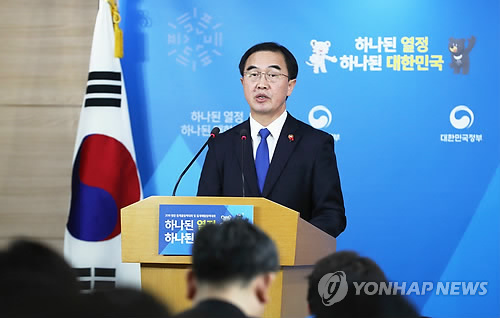
South Korea on Tuesday proposed high-level talks with North Korea next week over its participation in the PyeongChang Winter Olympics, in response to leader Kim Jong-un’s reconciliatory New Year message the previous day.
AEN20180102006651315_01_i.jpg
Unification Minister Cho Myoung-gyon proposed that the two Koreas meet next Tuesday at the truce village of Panmunjom in the heavily fortified demilitarized zone.
“We hope that South and North Korea will sit down to discuss the North’s participation in the games and ways to improve inter-Korean ties in a frank manner,” Cho said at a press conference.
“The government has a willingness to have dialogue with the North regardless of timing, place and format,” the minister said.
In a New Year’s speech on Monday, Kim said that Pyongyang is open to dialogue with Seoul, hinting at its willingness to take part in the Winter Games to be held in South Korea on Feb. 9-25.
Kim’s surprise offer came as the South is pinning hopes on the North’s participation in the games because it believes that the move could help ease tensions on the Korean Peninsula. South Korea’s presidential office welcomed Kim’s olive branch.
If realized, it would mark the first high-level inter-Korean talks since December 2015.
“We think that the suspended inter-Korean communication channels should be immediately restored. We propose that the two Koreas discuss details of talks including agenda items and the composition of delegations through the channel at the truce village,” Cho said.
Key communication channels between the two Koreas are not operating as the North cut off them in February 2016 in protest against Seoul’s shutdown of an inter-Korean industrial complex.
South Korea’s presidential office welcomed Monday’s proposal by North Korean leader Kim Jong-un to send a delegation to the upcoming PyeongChang Olympics slated for next month.
“We welcome that Kim expressed willingness to send a delegation and proposed talks as he acknowledged the need for improvement in inter-Korean ties,” Cheong Wa Dae spokesman Park Soo-hyun told a press briefing. “The successful launch of the games will contribute to stability not only on the Korean Peninsula but also in East Asia and the rest of the world.”
In a televised message earlier, Kim said he could send a delegation to the games and is open to talks with Seoul. But he also made it clear that his country would not give up its nuclear and missile programs, and he claimed that a “nuclear button” is always on his desk.
Cheong Wa Dae stressed that it has always intended to hold talks with the North regardless of “time, place or manner” so long as such a meeting can help restore frayed relations and improve overall stability in the region.
“We hope to sit together (with the North) as concerned parties to find a solution to enhance stability on the peninsula while engaging with the international community in resolving the nuclear issue,” the office said.
Inputs
yonhapnews.co.kr

US to withhold $255mn military aid to Pakistan

White House has said it will continue to withhold $255 million in military aid to Pakistan until the Trump administration reviews the country’s actions in confronting terrorists and militants.
“The United States does not plan to spend the $255 million in FY 2016 foreign military financing for Pakistan at this time,” a National Security Council spokesman said, quoted by CNN. “The President has made clear that the United States expects Pakistan to take decisive action against terrorists and militants on its soil, and that Pakistan’s actions in support of the South Asia strategy will ultimately determine the trajectory of our relationship, including future security assistance.”
The Trump administration first said in August that it was temporarily withholding the $255 million aid, which was part of a $1.1 billion aid package authorised in 2016 by Congress. The money was withheld until Pakistan ‘agreed to do more to combat terrorist networks’.
The National Security Council official said the administration would continue to review Pakistan’s level of cooperation in security areas.
US President Donald Trump on Monday threatened to cut aid to Pakistan after accusing the country of giving nothing in return except for “lies and deceit”.
In a tweet on New Year’s Day, he claimed that the United States had foolishly given Pakistan over $33 billion in aid over the last 15 years.
Trump also accused Pakistan of thinking US leaders to be fools. “They give safe havens to the terrorists we hunt in Afghanistan, with little help. No more!”
US president tweeted -:
The United States has foolishly given Pakistan more than 33 billion dollars in aid over the last 15 years, and they have given us nothing but lies & deceit, thinking of our leaders as fools. They give safe haven to the terrorists we hunt in Afghanistan, with little help. No more!
Trump’s tweet drew a strong reaction from Pakistan. Foreign Minister Khawaja Asif said Pakistan has already refused to ‘do more’ for the United States.
“We have already told the US that we will not do more, so Trump’s ‘no more’ does not hold any importance,” Asif told Geo News.
“Pakistan is ready to publicly provide every detail of the US aid that it has received,” Asif added.

AI use to diagnose of childhood asthma

Delhi’s CSIR-Institute of Genomics and Integrated Biology (IGIB), Indraprastha Institute of Information Technology (IIIT) and AIIMS  researchers made an able diagnostics study  to improve the diagnosis of childhood asthma and even identify three asthma subtypes.
The researchers have been able to correctly identify children with asthma and also the subtypes along with potential biomarkers using artificial intelligence (AI).
Researchers observed that children belonging to subtype 1 showed a typical signature of ammonia metabolite but had no family history of asthma. Subtype 3 had lower blood eosinophilia and elevated neutrophilia compared with the other two subtypes. Children belonging to this subtype had a stronger family history of asthma and suffered from more acute asthma episodes even when on treatment.
Subtype 2 had high eosinophil count but was otherwise similar to subtype 1, but very different from subtype 3.
The algorithm was able to differentiate the total nuclear magnetic resonance (NMR) spectrum of healthy children and those who had asthma. The algorithm has 80 per cent sensitivity and 75 per cent specificity in identifying children with asthma.

Henrietta Fore becomes new UNICEF Executive Director

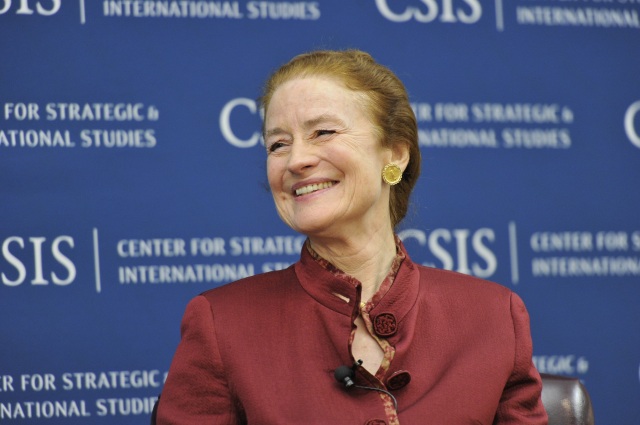
ED_Photo.jpg
NEW YORK, 1 January 2018 – Henrietta Fore takes office today as UNICEF’s seventh Executive Director.  Ms. Fore brings to the role more than four decades of private and public sector leadership experience.
“I am honored to be joining such a remarkable organization, which I have known and admired for many years, and look forward to continuing UNICEF’s work to help save children’s lives, fight for their rights and help them realize their potential,” Ms. Fore said.
United Nations Secretary-General Antonio Guterres appointed Ms. Fore as UNICEF Executive Director after consultation with UNICEF’s governing board.
Prior to taking up this appointment Ms. Fore served as Chair of the Board and Chief Executive Officer of Holsman International, a manufacturing and investment company. From 2007 to 2009, Ms. Fore, an American national, served as both the Administrator of the U.S. Agency for International Development (USAID) and as Director of United States Foreign Assistance in the U.S. State Department.  From 2005 to 2007, Ms. Fore was Under Secretary of State for Management, the Chief Operating Officer for the U.S. Department of State. Prior to that, she was the 37th Director of the United States Mint, a position she held from 2001 to 2005. Earlier in her career, at USAID, she was appointed as Assistant Administrator for Asia and Assistant Administrator for Private Enterprise (1989-1993). She also served on the Boards of the Overseas Private Investment Corporation, and the Millennium Challenge Corporation.
In addition to her Government service, Ms. Fore has had leadership roles in a number of organizations in civil society, including being Global Co-Chair of the Asia Society, and associations with the Center for Strategic and International Studies, the Aspen Institute, the Committee Encouraging Corporate Philanthropy, and the Center for Global Development.
Ms. Fore has also had leadership roles in the corporate sector, serving on the boards of a number of U.S. and international public corporations, and being active in promoting best practices in the corporate sector – including as Co-Chair of Women Corporate Directors. Effective December 31, 2017 Ms. Fore will have stepped down from all outside board engagements.
Ms. Fore has a Bachelor of Arts in History from Wellesley College and a Master of Science in Public Administration from the University of Northern Colorado. She is married and has four children.

Dear Naresh

Dear Naresh,
Despite a difficult and hostile political environment in 2017, we’re proud of the inspiring work we accomplished with you, our supporters. Together, we provided free legal representation to 2,023 refugees and linked hundreds of refugee families with critical basic resources, like food, clothing, housing, and medical and mental healthcare.
Behind those numbers are real people. Take Theodore*, an Ethiopian political activist who was tortured by authorities for his efforts to expose corruption within the government.
Or Jessica and Milo, two young children from El Salvador whose mother was forced to send them to the United States border after the MS-13 gang killed her husband and targeted her family.
Together, we not only won asylum for Theodore, Jessica, and Milo, but brought help to them and thousands of others in need. Their future is brighter because of you.

2 more people killed as protests across Iran enter fifth day – local MP

At least two people taking part in protests in the southwestern Iranian town of Izeh, 450 kilometers southeast of Tehran, were killed overnight, a local MP told ILNA news agency. This brings to at least four the number of fatalities in the ongoing protests. Thousands of pro- and anti-government demonstrators have taken to the streets across Iran since Thursday. The anti-government protests were prompted mostly by discontent over economic hardship and alleged corruption.